

Montana Native Plants
Blake Nursery has had a long standing love affair with Montana native plants, and the more we see and learn about them, the more intense our devotion. Some of the best aspects of landscaping with natives include their drought tolerance (though not always), adaptability to temperature fluctuations, acceptance of native soil conditions, and attraction to wildlife such as butterflies and song birds. With naturals like these you'll have fewer headaches than when dealing with unacclimatized imports. Landscaping with native plants connects you with your local environment as you learn the plant names, discover their habitats and the wildlife that depend on them.


Featured Montana Natives

Rabbitbrush
Chrysothamnus nauseosus
A tough, silver leafed 3-4' shrub often mistaken for Sagebrush--until fall when it bursts into abundant bloom! Suddenly its zesty yellow flowers brighten the prairie. Rabbitbrush is drought and alkalinity tolerant, thus is well suited to much of Montana.

Gumbo Lily
Oenothera cespitosa
Also known as Gumbo Evening Primrose, it was collected “near the falls of the Missouri” by Meriwether Lewis, July 17, 1806. A low-growing, long-blooming perennial with startlingly beautiful, large white flowers that open in early evening and wilt the following day. Their sweet scent attracts the pollinating Hawk Moth. If you give them plenty of sun and do not overwater, they will deliver many weeks of enjoyment every year.

Ponderosa Pine
Pinus ponderosa
Montana’s state tree for good reason. Longlived — 350 to 500 years, this rugged evergreen with a straight trunk grows in difficult sites where most other plants would never venture. In fact its taproot can delve 30' into the ground seeking water. Its green needles, 5-10" long, are usually in bundles of three. We love its natural, open form, a pleasing contrast to the formal, nonnative Colorado Spruce. Birds also fancy Ponderosas for nesting and feeding.

Trilobe Sumac
Rhus trilobata
Sometimes unflatteringly called “Skunkbush Sumac”, because of its supposedly stinky leaves when crushed, we have never encountered anything unpleasant about this tough shrub. We appreciate its compound leaves with three oak-like leaflets, red-orange-yellow fall foliage, and cheery clusters of red berries albeit unpalatable to humans. This Sumac can form dense thickets where birds and mammals find cover for nesting and shelter. As if that’s not enough, this drought tolerant plant is commonly used for soil stabilization thanks to its tenacious, spreading roots.

Wax Currant
Ribes cereum
Also known as Squaw Currant, a compact, rounded, rather humble 3' tall plant that's a treasure of Montana’s native landscape. It's easy to identify by its greenish-white to pink, tubular flowers and unpalatable red berries best left for the birds! In the wild it's found in dry, rocky sites....an ideal Xeriscape plant.

Serviceberry
Amelanchier alnifolia
Serviceberry, Juneberry, Shadblow, Sarvisberry, call it what you will, but by any name this plant, botanically Amelanchier, is one of the loveliest we know. In early spring before leaves appear Serviceberry’s white flowers make a delicate, airy display. Summer brings blueberry-like fruit that’s sweet, juicy and coveted by birds and jelly-makers

For more information on plants native to our region, an excellent source is H. Wayne Phillips, author of Plants of the Lewis and Clark Expedition (2003), Central Rocky Mountain Wildflowers (2012), Northern Rocky Mountain Wildflowers (2012), and The Wildflowers of Yellowstone and the Rockies Postcard Book (2003). All are available from Amazon.
Montana Native Trees Catalog

Rocky Mountain Maple
Scientific Name: Acer glabrum
Native Habitat: along mountain streams, canyons
Height: 20-25'
Description: multi-stem; reddish stems and striking orange-red fall color

Water Birch
Scientific Name: Betula occidentalis
Native Habitat: stream courses; moist sites
Height: 20-25'
Description: multi-stem; shiny cinnamon-red bark; leaves yellow to orange-red in fall; a Blake Nursery favorite!

Douglas Hawthorn
Scientific Name: Crataegus douglasii
Native Habitat:higher elevations; stream banks
Height: up to 35'
Description: shrub or small tree; brilliant fall foliage; thorny; white flowers in spring

Rocky Mountain Juniper
Scientific Name: Juniperus scopulorum
Native Habitat: eastern foothills of the rocky Mountains in dry soils
Height: 15-20'
Description: native evergreen with upright branching and dense branching habit; colors vary from blue to green; drought tolerant

Ponderosa Pine
Scientific Name: Pinus ponderosa
Native Habitat: large variety of soils at varied locations
Height: 50-80'
Description: large open habit with 5-7" needles in bundles of three; drought tolerant; excellent xeriscape plant

Narrowleaf Cottonwood
Scientific Name: Populus angustifolia
Native Habitat: riparian areas at mid to high-elevations
Height: 50-70'
Description: long narrow leaves; more upright than Plains; extremely hardy

Plains Cottonwood
Scientific Name: Populus deltoides
Native Habitat: riparian areas at mid to lower-elevations
Height: 60-90'
Description: broad, open crown; furrowed bark; fast growing; more drought tolerant than other cottonwood

Sargent Cottonwood
Scientific Name: Populus sargentii
Native Habitat: riparian areas at mid to lower-elevations
Height: 70'
Description: broad, oval shape and furrowed bark; similar to Plains Cottonwood, except that it defoliates earlier

Quaking Aspen
Scientific Name: Populus tremuloides
Native Habitat: mid to high elevations; moist sites
Height: 60-90'
Description: delicate leaves "tremble" in the breeze; propagates through its roots to form large groves; fast growing

Black Cottonwood
Scientific Name: Populus trichocarpa
Native Habitat: moist soils along water courses
Height: 75-100'
Description: dold bark is dark-colored, thus 'black' cottonwood; native to western and central MT; suckering

Lanceleaf Cottonwood
Scientific Name: Populus x acuminata
Native Habitat: riparian areas at mid-elevations
Height:40-50'
Description: naturally occurring cross between Plains and Narrowleaf; leaves shaped like the head of a spear; fast growing like all Cottonwood
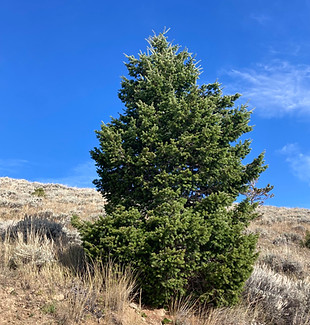
Rocky Mountain Douglas Fir
Scientific Name: Pseudotsuga menziesii
Native Habitat: higher elevations
Height: 50-75''
Description: evergreen tree preferring moderate moisture, north facing slopes and well drained, gravelly soils.

Bur Oak
Scientific Name: Quercus macrocarpa
Native Habitat: sandy plains, river bottoms, limestone soils
Height: 70-80'
Description: Large majestic tree with broad crown; acorns with mossy fringe, thus nicknamed "Mossycup Oak"; native to eastern Montana; long lived

Dwarf Mountain Ash
Scientific Name: Sorbus scopulina
Native Habitat: higher moisture areas, with good soil
Height: 6-12'
Description: deep green leaves turn orange-red in fall; clusters of orange berries attract birds
Montana Native Shrubs Catalog

Thinleaf Alder
Scientific Name: Alnus incana spp. tenuifolia
Native Habitat: banks of mountain streams and canyons
Height: 15-30'
Description: open crown; ascending branches; retains attractive catkins on branches into winter

Serviceberry or Juneberry
Scientific Name: Amelanchier alnifolia
Native Habitat: often along streambanks, moist areas
Height: 10-12'
Description: outstanding large shrub with fragrant white flowers and edible berries; orange-red fall color; excellent wildlife cover

Basin Big Sagebrush
Scientific Name: Artemisia tridentata spp. tridentata
Native Habitat: open, dry areas, rangelands and pastures
Height: 4-8'
Description: silver foliage; yellow fall flowers; extremely drought tolerant, excellent xeriscape plant; found at higher elevations than WY Big Sagebrush

Wyoming Big Sagebrush
Scientific Name: Artemisia tridentata spp. wyomingensis
Native Habitat: open, dry areas, rangelands and pastures
Height: 2-4'
Description: silver foliage, yellow fall flowers; extremely drought tolerant; found at lower elevations than Basin Big Sagebrush

Curl-leaf Mountain Mahogany
Scientific Name: Cercocarpus ledifolius
Native Habitat: dry, gravelly limestone areas
Height: up to to 20'
Description: shrub or small tree, crooked trunk and branches, thin evergreen leaves

Rabbitbrush
Scientific Name: Chrysothamnus nauseosus
Native Habitat: open rangelands
Height: 2-3'
Description: masses of yellow flowers in fall; twisted narrow leaves; very drought tolerant; xeriscape plant

Red Twig Dogwood
Scientific Name: Cornus sericea/stolonifera
Native Habitat: along stream banks or moist sites
Height: 8-10'
Description: bright red bark provides striking contrast in winter; white flowers in spring; excellent for streambank restoration; wildlife will browse

Pincushion Cactus
Scientific Name: Coryphantha vivipara
Native Habitat: dry areas
Height: 1-2"
Description: small solitary or clumping cactus; densely covered by straight white spines that form a mat of star-shaped arrays; flowers are pink in May and June; extremely drought tolerant; xeriscape plant

Silverberry
Scientific Name: Eleaegnus commutata
Native Habitat: open sites; moist to dry soils
Height: 8'
Description: sweetly scented flowers in spring; silver-leafed upright shrub suckers freely to form thickets - good for erosion control; provides food and cover for birds and nectar for bees

Creeping Oregon Grape
Scientific Name: Mahonia repens
Native Habitat: shaded, forested areas
Height: 1-2'
Description: evergreen; fragrant yellow flowers; shiny, dark green, holly-like leaves turn red in fall; blue edible fruits persist in winter; suckering makes it an excellent groundcover

Prickly Pear Cactus
Scientific Name: Opuntia polyacantha
Native Habitat: dry areas
Height: 4-12"
Description: spinny, fleshy pads look like leaves but are actually modified stems; flowers range from yellow to pink in May and June; extremely drought tolerant; xeriscape plant

Lewis' Mockorange
Scientific Name: Philadelphus lewisii
Native Habitat: drier areas
Height: 4-8'
Description: fragrant white flowers; scientific name honors Meriwether Lewis; collected on the L & C Expedition on the Clark Fork River in Montana; Idaho State Flower; Native Americans used its straight stems in making arrows

Native Yellow Potentilla
Scientific Name: Potentilla fruticosa
Native Habitat: wet or dry open ground
Height: up to 4'
Description: long blooming, showy yellow flowers over grayish-green, pinnately compound leaves; widely branching; deer resistant

American Plum
Scientific Name: Prunus americana
Native Habitat: moist sites
Height: up to 7'
Description: fragrant white flowers in spring; edible red to purple plums in late summer; brilliant orange-red fall foliage

Western Sandcherry
Scientific Name: Prunus besseyi
Native Habitat: prefers drier sites
Height: 5-6'
Description: fragrant white flowers in spring, purple-black edible fruits attract songbirds; drought tolerant; excellent xeriscape plant

Common Chokecherry
Scientific Name: Prunus virginiana
Native Habitat: mountain slopes, streambanks
Height: up to 30'
Description: shrub or small tree that suckers; fragrant white flowers; bright red to black berries used for jelly, syrup and wine; brilliant fall foliage; fast growing

Antelope Bitterbrush
Scientific Name: Purshia tridentata
Native Habitat: dry areas
Height: up to 10'
Description: low, woody shrub; collected on the Lewis & Clark Expedition July 6, 1806 in Powell County, Montana; provides excellent forage and cover for wildlife

Trilobe or Skunkbrush Sumac
Scientific Name: Rhus trilobata
Native Habitat: limestone outcroppings
Height: 3-4'
Description: sdense, thicket-forming shrub with yellow flowers and orange-red berries; brilliant fall color; browsed by wildlife

Golden Currant
Scientific Name: Ribes aureum
Native Habitat: along streams, prefers sunny, moist site
Height: 4-6'
Description: yellow flowers in spring; black berries; arching branches; suckers readily; red to orange fall foliage

Scientific Name: Ribes cereum
Native Habitat: dry, rocky sites
Height: up to 6'
Description: spreading shrub with orange or red berries that attract birds; spring flowers are a hummingbird favorite

Woods' Rose
Scientific Name: Rosa woodsii
Native Habitat: adaptable but prefers riparian areas
Height: up to 6'
Description: single pink flowers bloom in June; red hips in fall and winter; suckers readily; excellent for streambank stabilization

Bebb's Willow
Scientific Name: Salix bebbiana
Native Habitat: riparian areas in subalpine and montane
Height: 3-12'
Description: medium shrub; younger twigs red-purple, older twigs with white streaks (cracks); mid elevations
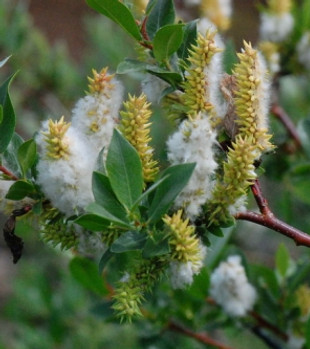
Booth's Willow
Scientific Name: Salix boothii
Native Habitat: streams and ditch banks
Height: 3-20'
Description: small to large shrub; twigs yellow, orange, or brown; no waxy layer on underside of leaves; mostly mid elevations, sometimes high

Coyote/Streambank Willow
Scientific Name: Salix exigua
Native Habitat: streams and ditch banks
Height: 5-25'
Description: medium to large shrub; leaves six times or more long than wide; mostly mid elevations

Yellow Willow
Scientific Name: Salix lutea
Native Habitat: well drained stream and ditch banks
Height: 10-25'
Description: medium to large shrub; twigs distinctly yellowish when young turning gray with age; waxy layer on underside of leaves; lower elevations

Silver Buffaloberry
Scientific Name: Shepherdia argentea
Native Habitat: poor, dry, alkaline soils to moist sites
Height: up to 15'
Description: silvery foliage, red-orange edible fruits, thorny; thicket-forming

White Snowberry
Scientific Name: Symphoricarpos albus
Native Habitat: plains and valley bottoms; moist areas
Height: 2-5'
Description: prominent white berries; suckers to form thicket; excellent for streambank stabilization

Yucca/Soapweed
Scientific Name: Yucca glauca
Native Habitat: dry plains and slopes
Height: 1-3'
Description: evergreen, sword-like leaves arise from clump; white flowers on a 2-3' stalk
Montana Native Perennials Catalog


Coral Bells
Scientific Name: Heuchera sanguinea
Height: 12-18"
Description: bell-shaped pink to white flowers on slender stems; blooms into early summer if deadheaded; lends an airy appearance to the landscape

Rocky Mountain Penstemon
Scientific Name: Penstemon strictus
Height: 2-3'
Description: attracts butterflies; dark "guidelines" on purple flowers direct insects into petal tube for pollination
Montana Native Grasses Catalog

Indian Ricegrass
Scientific Name: Achnatherum hymenoides
Height: 20-30"
Description: cool-season bunchgrass; narrow, rolled leaf blades; seeds coveted by birds; moderately salt and alkali tolerant; drought tolerant

Big Bluestem
Scientific Name: Andropogon gerardii
Height: 3-6'
Description: warm-season bunchgrass with distinctive three-parted seedheads resembling a turkey foot; green leaves and stems turn a red-bronze in fall, providing excellent winter interest; highly adaptable to soil types, including wet clay; ideal for screening

Blue Grama
Scientific Name: Bouteloua gracilis
Height: 10-20"
Description: warm-season bunchgrass; attractive eyebrow shaped seed heads retained through the fall; excellent drought tolerance

Idaho Fescue
Scientific Name: Festuca idahoensis
Height: 1'
Description: cool-season, Montana native bunchgrass that is densely tufted; blue-green, wiry leaves

Prairie Junegrass
Scientific Name: Koeleria macrantha
Height: 6-18"
Description: cool-season bunchgrass; small-stature

Basin Wild Rye
Scientific Name: Leymus cinereus
Height: 5-8'
Description: cool-season bunchgrass; long-lived

Bluebunch Wheatgrass
Scientific Name: Pseudoroegneria spicata
Height: 1-2'
Description: cool-season bunchgrass; state grass of Montana; excellent accent plant with upright flowering spikes

Little Bluestem
Scientific Name: Schizachyrium scoparium
Height: 1-4'
Description: warm-season bunchgrass with striking red fall color

Indiangrass
Scientific Name: Sorghastrum nutans
Height: 5'
Description: warm-season bunchgrass common in the tallgrass prairies

Sweetgrass
Scientific Name: Hierochloe odorata
Height: 1-2'
Description: cool-season rhizomatous grass with vanilla scented foliage. Cut, dry and braid the leaves for a long lasting scent indoors.
Below is a native plant display garden planted at the Big Horn County Historical Museum in Hardin, Montana. The focus was on using native plants with a significant historical use, mainly for food and medicine. Some plant species selected were Silver Buffaloberry, Golden Currant, Narrowleaf Coneflower, and Bitterroot.


